Welcome to the quick guide of DICloak! In this step-by-step tutorial, we’ll walk you through the simple process of registering an account and creating a browser profile. Whether you’re a new user or need a refresher, this easy-to-follow instruction will ensure you can easily catch up. Let’s dive in!
I. Download DICloak
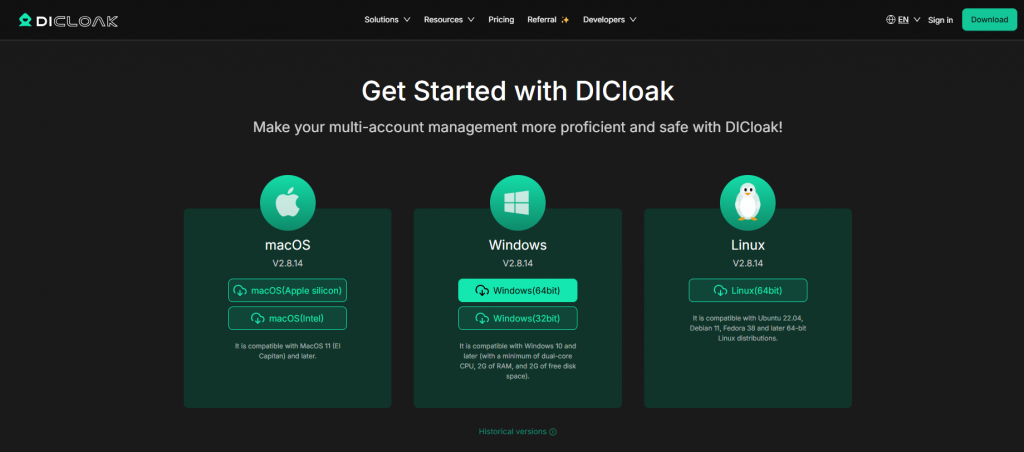
First, install DICloak on your computer. DICloak is now supported on Windows ,MacOS and Linux operating system. It is recommended to install DICloak on a non-system drive with a large capacity.
II. Registration
i. Sign up & Log in
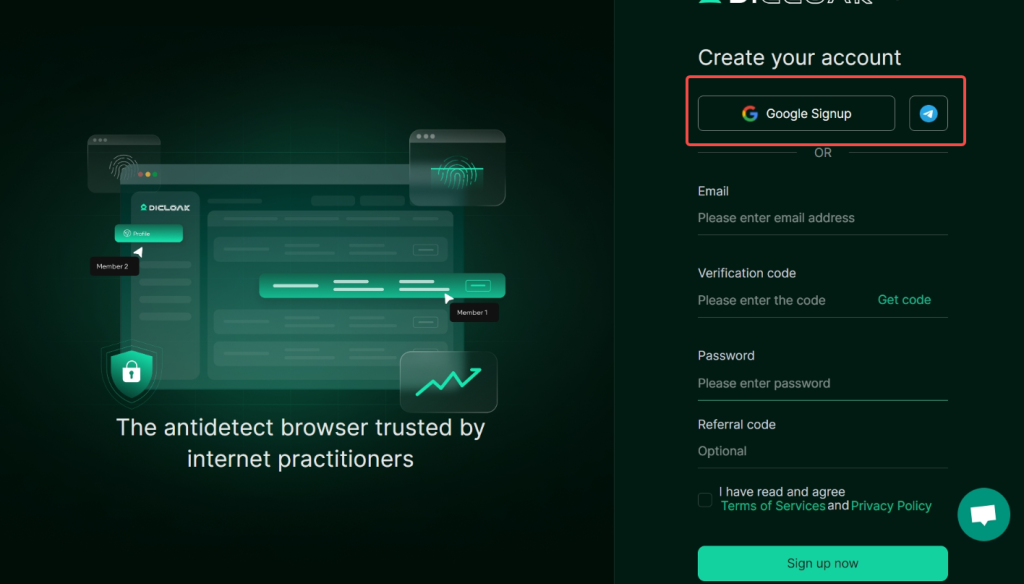
After installing DICloak, you need to run the program and register a new account. You only need to enter your email address and create a password, then a new account is ready for service! If you’ve already had an account, you can log in immediately. Passwords can be remembered by default for easier access during subsequent logins.
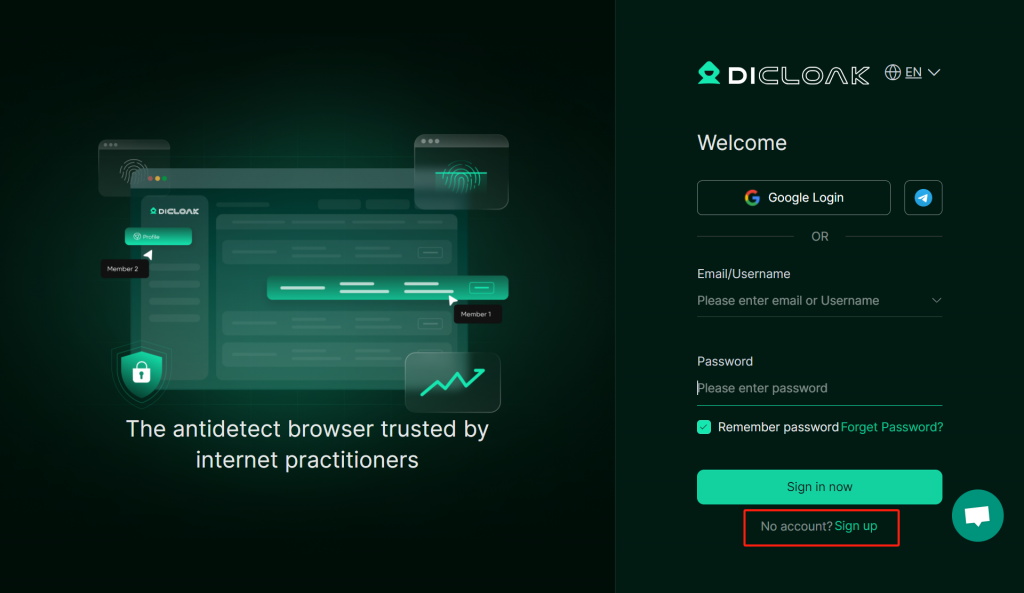
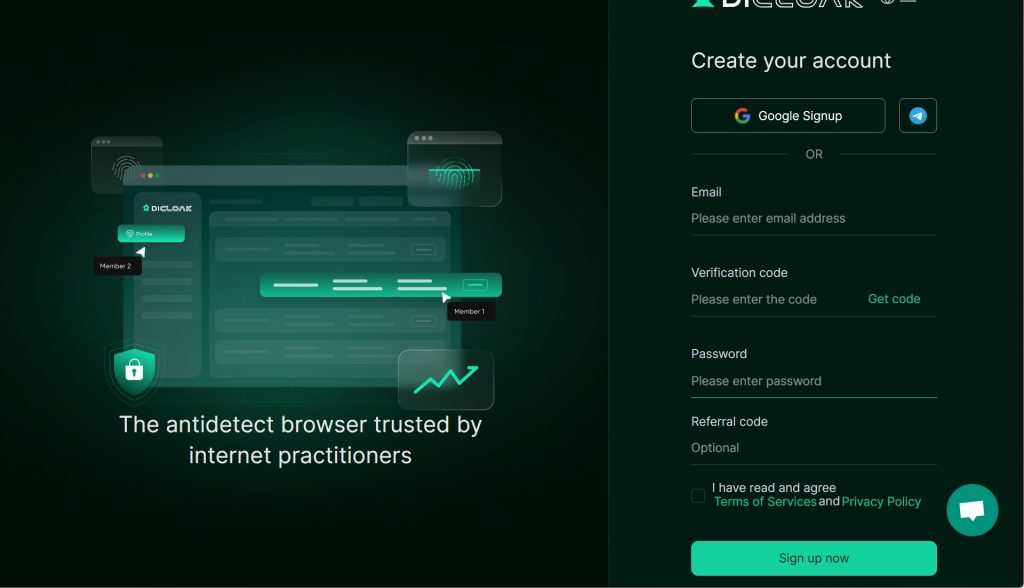
You can also register an account via Google Quick Signup or Telegram Quick Signup.
III. Create a Browser Profile
i. Create an Profile Directly
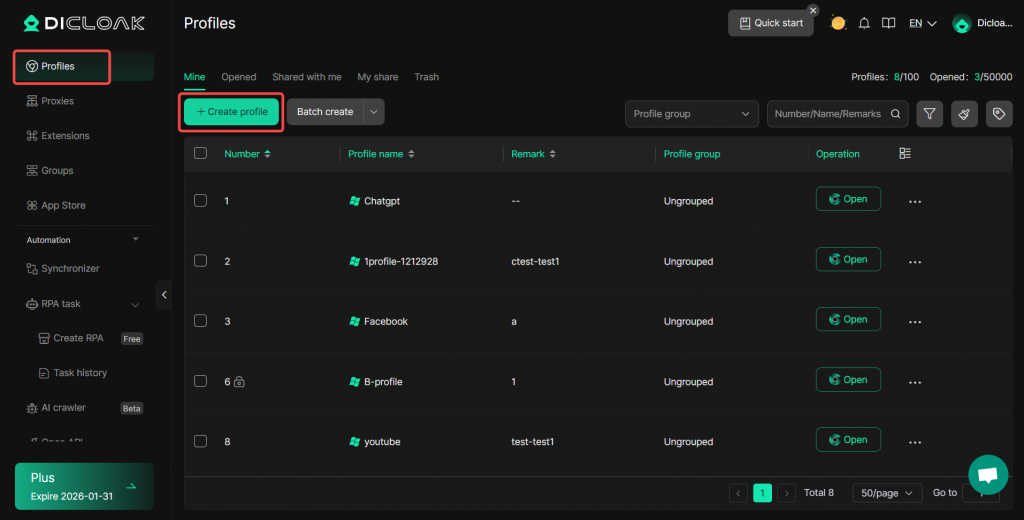
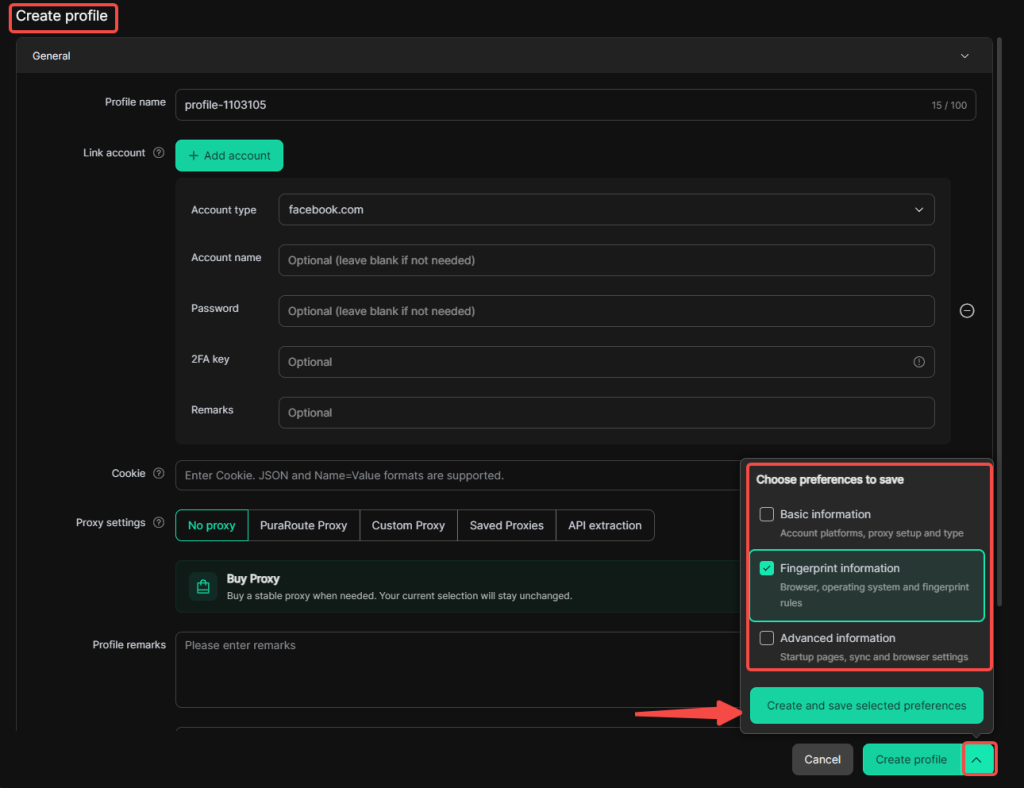
- Click “Profiles” – “Create profile“
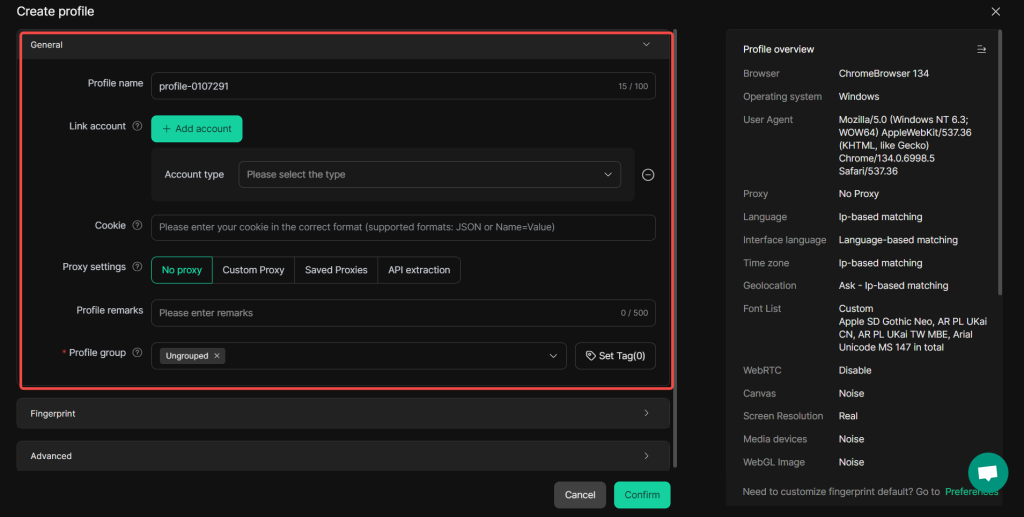
(i) General Setting
- Profile name: Enter the profile name, which is required for easy management.
- Link account: You can add an account and need to select the account type.
- Cookie: Cookie information should be entered in JSON format.
- Proxy settings: For proxy configuration, you can choose “No proxy”, “Custom Proxy”, or “Saved Proxies”.
- Profile remarks: You can enter remarks for the profile, with a limit of within 200 characters.
- Profile group: The profile grouping, currently “Ungrouped”.
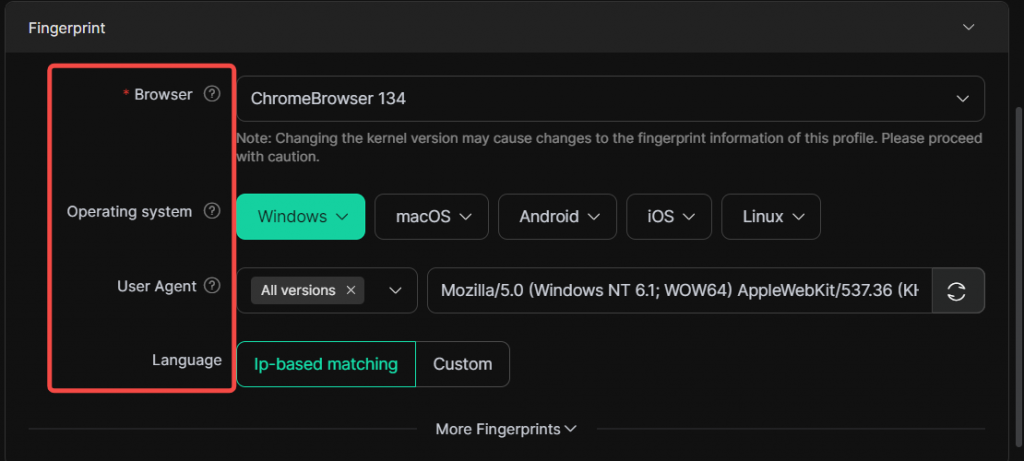
(ii) Fingerprint Settings
- Browser: Profiles support kernel versions 120, 134, 142, 143, 147, 150, 151, 152, 155. The device must download the corresponding kernel version selected for the profile. It is recommended to choose 155 or above, as the newer kernel version has better compatibility with websites. Please note,Linux devices support only versions 134, 142, 143, 147; kernel version 120, 150, 151, 152, 155 is not supported.
- Operating System: Select the operating system(s) that you want to simulate. DICloak supports different versions of Windows, macOS, Android, iOS, and Linux. You can choose one system or multiple systems. If multiple systems are selected, one of them will be randomly chosen for simulation.
- User Agent: Choose the UA version based on your needs. Selecting “All Versions” will randomly assign a UA from the available options under the chosen operating system.
- Language: The default language for the tab, can be set based on IP matching or customized.
[ More Fingerprint ]
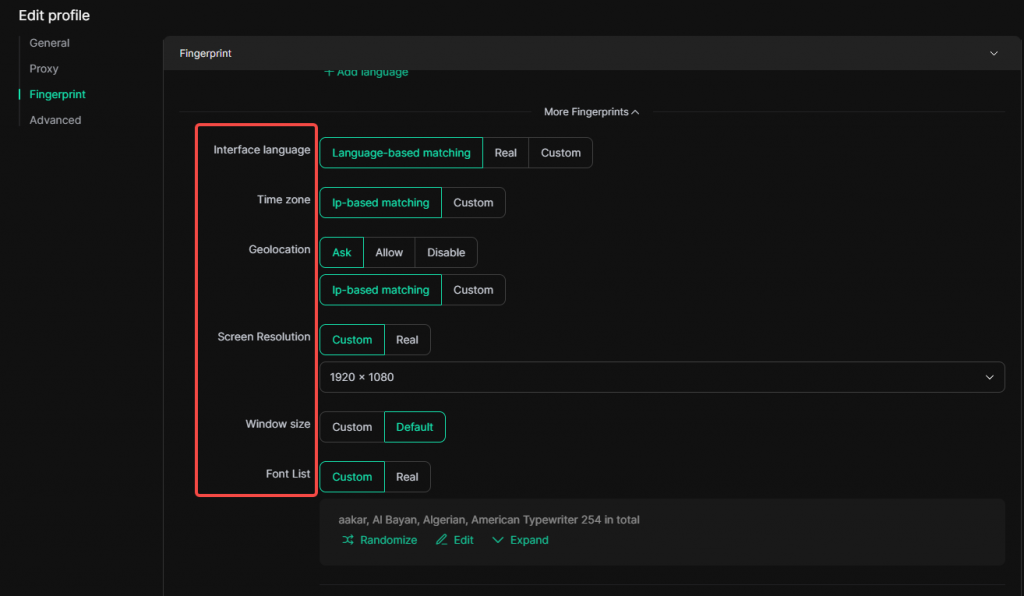
- Interface language: Browser interface language. Set based on language – matching rules or customize it manually.
- Time zone: Can be set to match IP-based location or customized manually to avoid detection issues.
- Geolocation: You can control access permissions (Ask, Allow, Disable) and set the location either by IP-based matching or custom input.
- Screen Resolution: Options include custom-setting a value, or using the real device resolution.
- Window size: “Custom” allows you to manually set a specific window size value; “Default” generates the window size according to certain rules based on the resolution setting.
- Font List: Choose between custom fonts or the real-world default to evade device identification via font fingerprints.
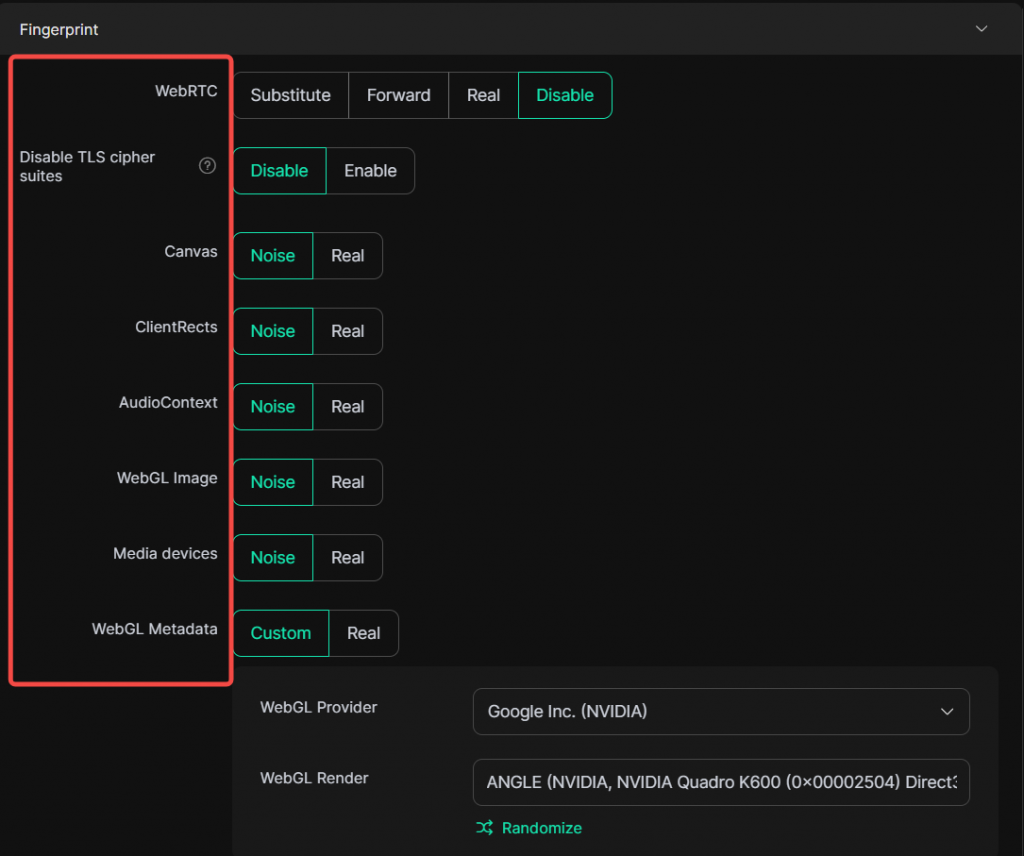
- WebRTC: Control WebRTC settings to prevent the disclosure of your real IP address. “Substitute” allows you to manually enter an IP address, use the network’s exit IP, or a random internal IP. “Forward” will forward WebRTC-related traffic through a proxy. “Real” uses the actual data from the device. “Disable” disables WebRTC, preventing websites from reading the current computer’s real IP address.
- Disable TLS cipher suites: It has “disable” and “enable” options, allow you to controls the network‑layer fingerprint generated during HTTPS handshakes. Enabling this feature will alter the TLS fingerprint exposed in HTTPS handshakes.
- Canvas, ClientRects, AudioContext, WebGL Image, Media devices: Each has “Noise” and “Real” settings. “Noise” likely adds variability to avoid consistent fingerprinting, while “Real” uses the actual device-related values.
- WebGL Metadata: It can be set to “Custom” or “Real”. “Custom” allows manual configuration of WebGL provider and WebGL render information, while “Real” uses the actual data from the device.
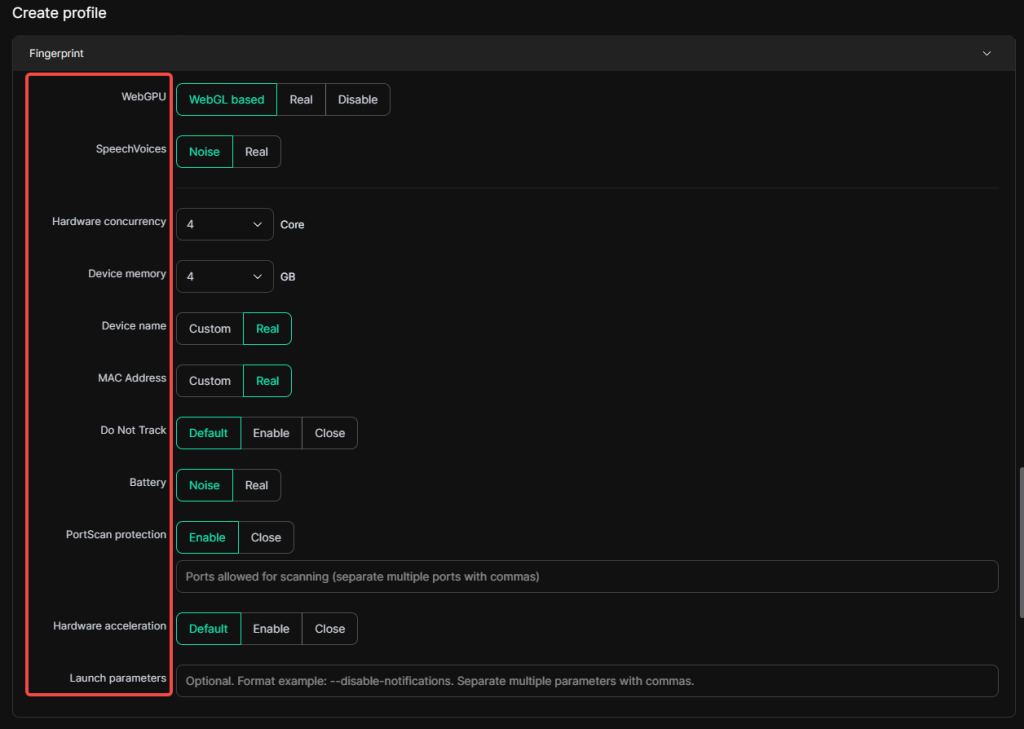
- WebGPU: Can be set to “WebGL-based”, “Real”, or “Disable”. “WebGL-based” uses WebGPU capabilities that match the WebGL metadata, “Real” uses the actual values of the device, and “Disabled” prevents the website from using WebGPU capabilities.
- SpeechVoices: With “Noise” and “Real” choices, it controls how speech-related features are presented to websites, helping to obfuscate or present real device information.
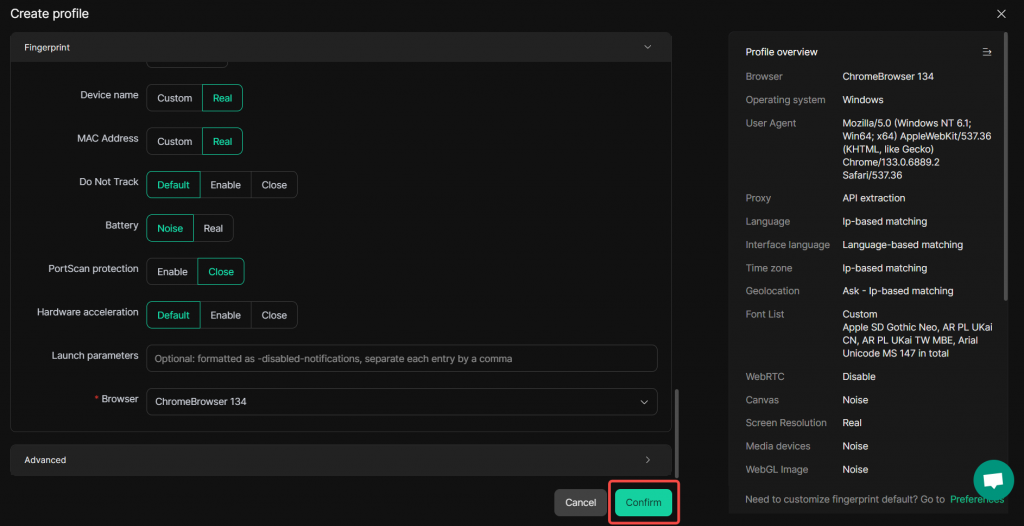
- Hardware concurrency: Sets the number of CPU cores the browser reports.
- Device memory: Specifies the amount of memory the device has.
- Device name: With “Random”, “Custome” and “Real” choices. Used to mask the actual device name; this setting takes effect only in version 2.7.5 or higher.
- MAC Address: With “Random”, “Custome” and “Real” choices. Used to mask the actual MAC address; this setting is only effective in version 2.7.5 and later.
- Do Not Track: Options like “Default”, “Enable”, and “Close” let you control whether the browser sends a “Do Not Track” signal to websites, affecting online tracking.
- Battery: “Noise” and “Real” settings manage how battery-related information is presented, with “Noise” adding variability.
- PortScan protection: “Enable” (selected) or “Close” controls port-scanning protection. When enabled, you can list allowed scan ports.
- Hardware acceleration: Can be set to “Default”, “Enable”, or “Close”, influencing how the browser uses hardware resources for better performance.
- Launch paramerters: Used to modify browser behavior at the underlying kernel level, addresses low-level issues that cannot be handled via high-level fingerprinting settings. This is an optional configuration.
(iii) Advanced Settings
- Default Startup Pages: You can enter a URL so the profile opens a specific site by default.
- Restore last session: You can choose whether to restore the last webpage you visited.
- Data sync: Sync selected data to the cloud when closing the profile, enabling cross-device collaboration.
- Clear local cache: You can set whether to clear local data before opening and the frequency of clearing.
- Browser Settings: Options include “Global settings” and “Custom” to apply general or specific browser-related configurations.
- Multiple sessions: “Global settings” (selected), “Allow”, and “Disable” let you control whether multiple instances of the profile can be opened simultaneously.
- Remote Inspector: “Global settings” (selected), “Allow”, and “Disable” let you controls whether the Chrome DevTools Protocol (CDP) debugging port is enabled when opening profiles. Not recommended outside development scenarios.
- Bookmark settings: Upload bookmark files to current profile with append or overwrite options.
- Website access restriction: Enable to set restrictions on whether team members can access specific websites.
- Extension settings: “Enable” and “Close” control the activation of extensions. You can also select an “Extension group” to add relevant extensions to the profile.
- Video stream spoofing: Once enabled, you can upload video files in the browser webpage to bypass KYC on certain platforms.
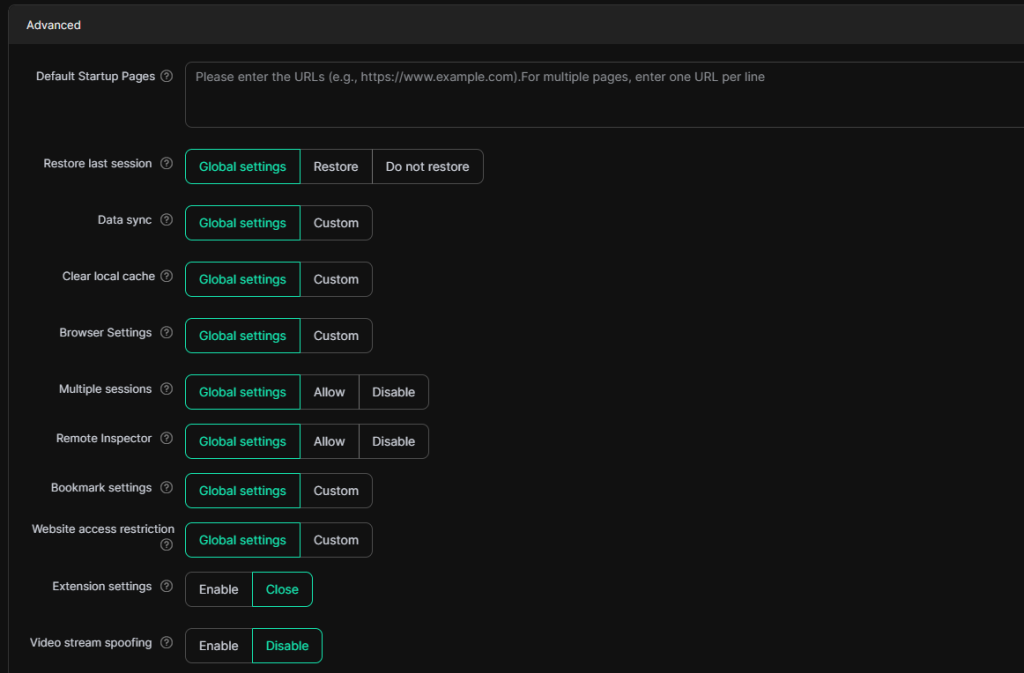
These settings give you fine-grained control over the profile’s behavior and functionality.
(iv) Confirm to Create the Browser Profile
- Click the “Confirm” button to complete the creation of the browser profile.
ii. Create a Profile Using the Profile Preference Template
Click the avatar in the upper right corner to go to Personal Settings > Profile Preference. Here you can configure your profile creation template. The template will be used by default when you create a new profile next time, which is suitable for quickly creating multiple profiles with identical or similar configurations.
This feature supports configuration of profile general settings, fingerprint settings and advanced settings. After completing the configuration, click Save. Then locate Profile management page on the left navigation bar and click Create Profile. The new profile will be created based on your saved template. You may also selectively check whether to directly apply the basic information, fingerprint data and advanced configurations from the template.
IV. Open Browser Profile
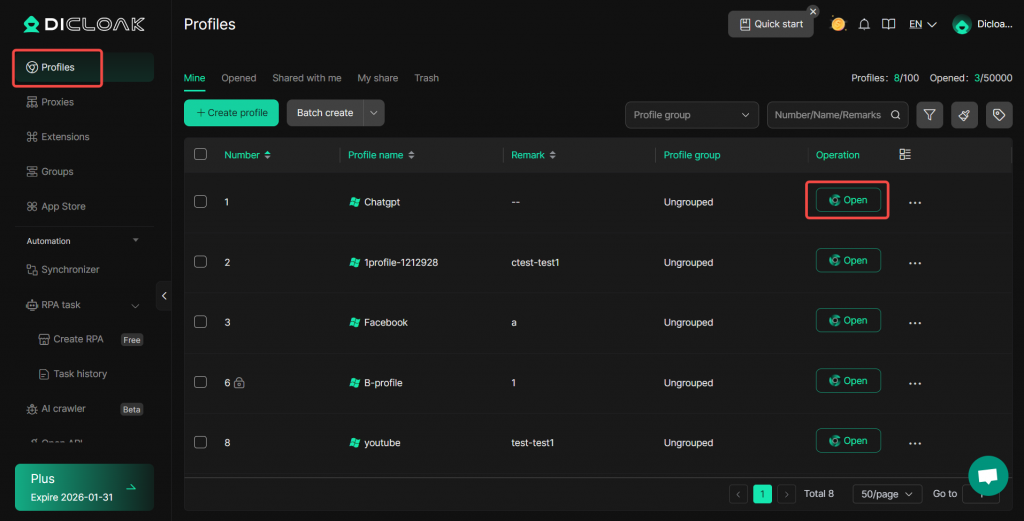
On “Profiles” page, the newly created browser profiles will be displayed. Click to open a browser profile for better online experience!