If you’re unable to open a browser profile, it could be caused by several common reasons, such as:
1.Antivirus or security software blocking the connection.
2.Insufficient device storage space.
3.Proxy connection failure.
4.Excessive or corrupted cache files.
5.Kernel not downloaded
6.Kernel extraction failed.
7.Software version is too low
If you’re experiencing difficulties opening your profile, this guide will help you troubleshoot and resolve the issue. Follow the steps below to identify and fix common problems that may be preventing access to your profile.
1️⃣ Download the Right DICloak Antidetect Browser Version
1.Go to the DICloak official website to download and install the software.
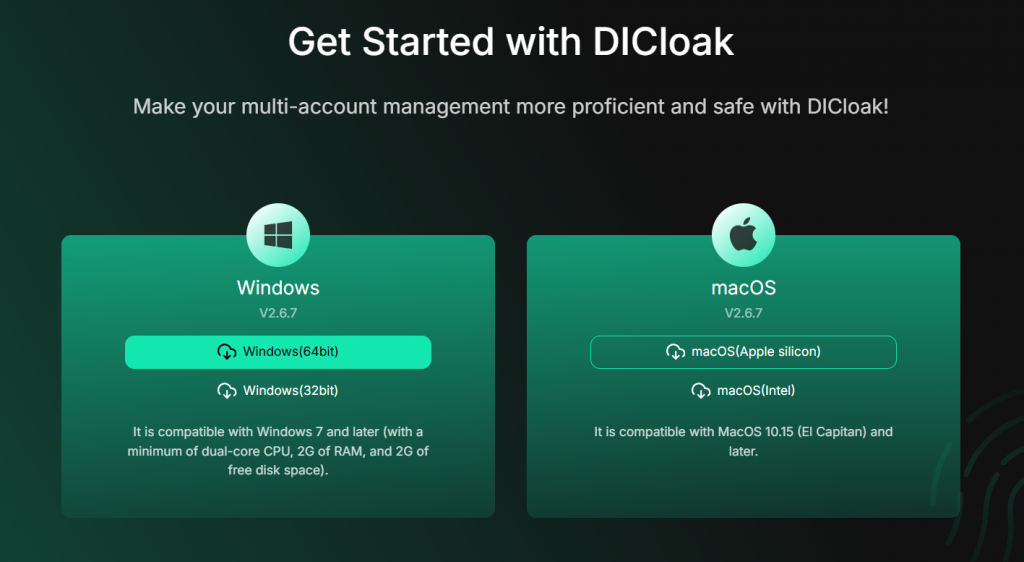
⚠️ All tool accounts can only be accessed through the DICloak Browser. They cannot be accessed via web, mobile phones, or tablets.
⚠️ Currently, only computer devices are supported. Please select the correct version based on your operating system:
💻 For Windows users
- Recommended system: Windows 10 or above
- Before installing, check whether your system is 32‑bit (x86) or 64‑bit (x64).
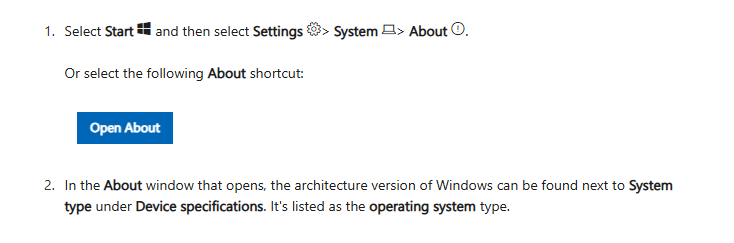
🍎 For Mac users (MacBook / iMac)
- Recommended system: macOS 11 or above (macOS Big Sur or above)
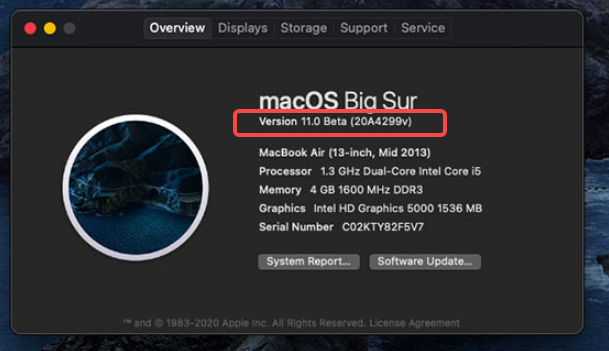
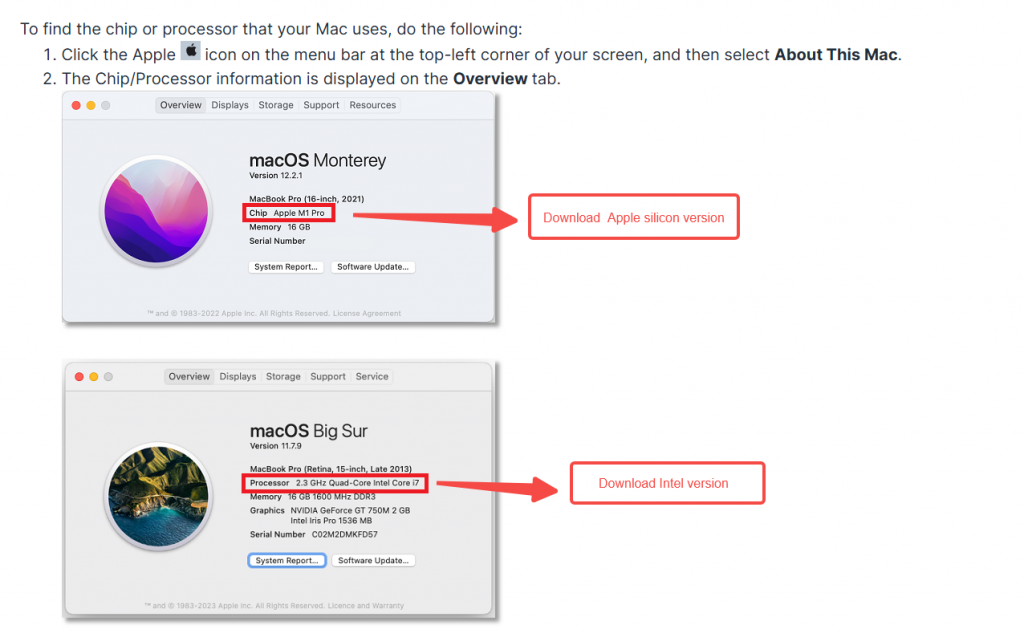
- Before installing, check your device’s chip type:👉 Go to “About This Mac” to see whether it uses an Intel processor or Apple Silicon (M1/M2 chip).
PS:If you have downloaded the wrong Mac version, like this:
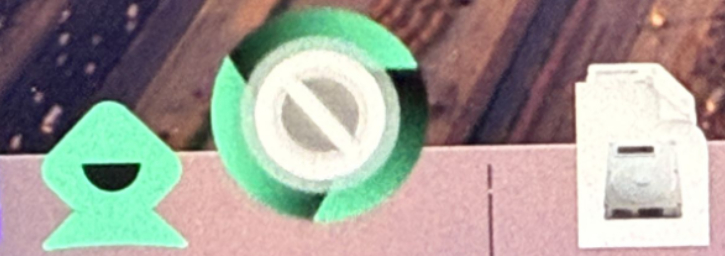
Please download the correct version. Then, click on the DICloak avatar, go to Personal Settings > Settings, find and click on Kernel, delete all previously downloaded Kernel files, and reopen your profile.
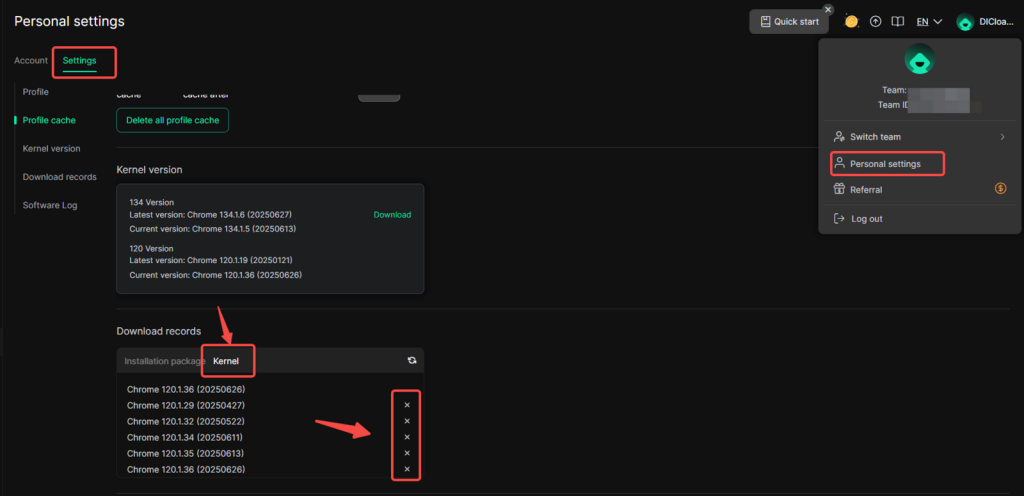
🐧 For Linux Users
- System Requirements: Ubuntu 22.04, Debian 11, Fedora 38 and later 64-bit Linux distributions.
- Before installation, verify that your system architecture is 64-bit:
- Open a terminal and run the following command to check:
uname -m - If the output is
x86_64, your system meets the 64-bit requirement.
- Open a terminal and run the following command to check:
- Download the Linux installation package and double-click it to install.
2️⃣ Unable to open Profile
📌 Case 1: Clicking “Open” shows no response
Please check whether your computer has antivirus software installed (such as RAV Antivirus, Norton 360, etc.).
Some antivirus programs may block DICloak from running. Follow these steps to add DICloak to the whitelist:
✅ How to add DICloak to your antivirus whitelist:
1.Open your antivirus software.
2.Find the settings section for Exclusions / Whitelist / Allowed Apps.
3.Add DICloak’s cache directory folder “.DICloakCache” to the exclusion list, then try opening the Profile again.
- Tip: You can find the cache folder path in DICloak by clicking your avatar (top right) → Personal Settings → Settings.
- Note: You may need to enable “Show hidden items” in your file explorer to see the “.DICloakCache” folder.
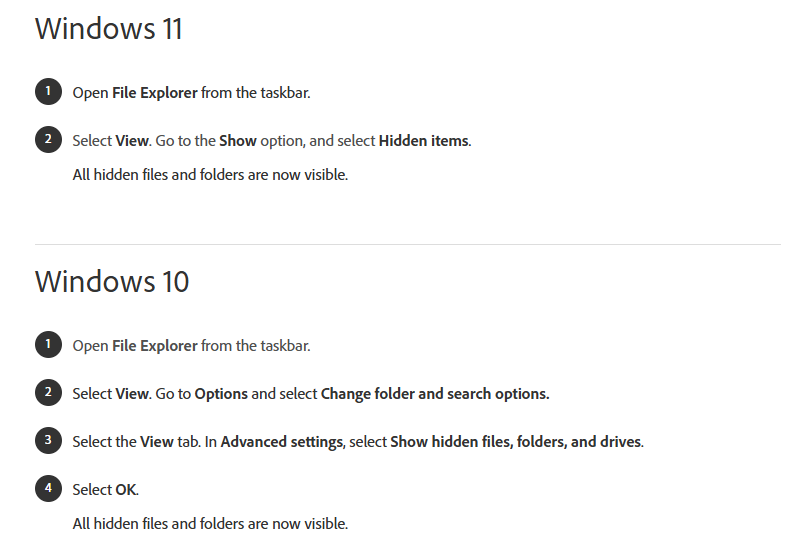
- If you cannot perform these steps, try temporarily disabling your antivirus software and reopening the Profile.
📌 Case 2: Failed to open profile
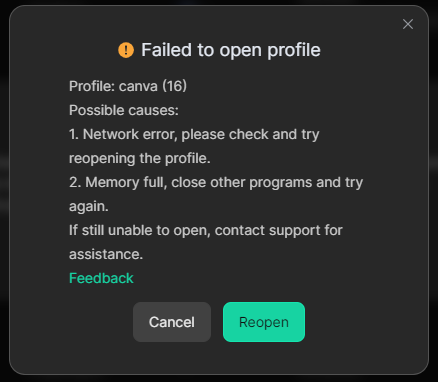
If you see the above prompt when opening a profile, please first ensure that you are opening it within the APP, as browser profiles cannot currently be opened via a web browser. If you are opening it within the APP, the issue is usually caused by network problems or insufficient disk space. You can try the following methods to resolve this issue:
✅ Method 1:
Check if there is a network issue. You can try switching to another network or connecting to a mobile hotspot to resolve the network problem. Then refresh the page and reopen the profile.
✅ Method 2:
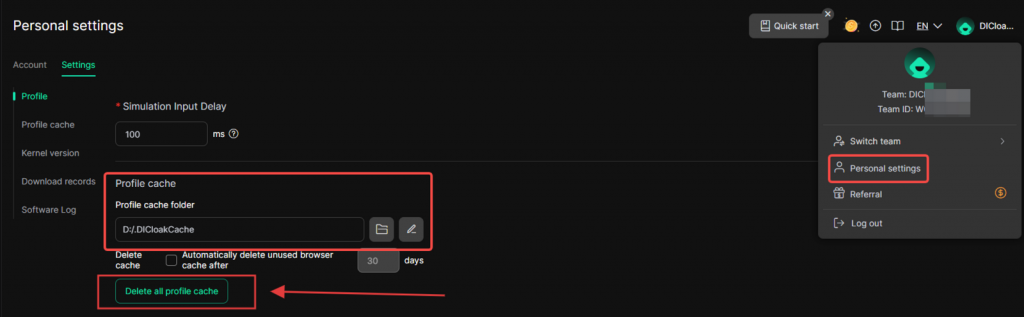
Click avatar (top right) → Personal Settings → Settings → click “Delete all profile cache” → reopen the Profile.
✅ Method 3:
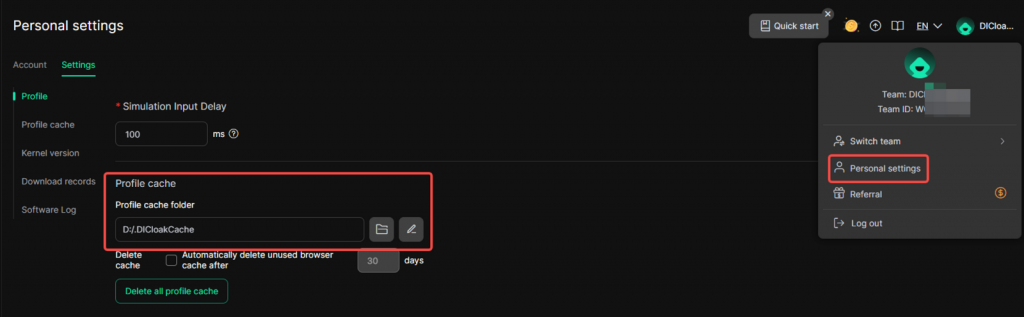
Click avatar (top right) → Personal Settings → Settings → change the cache folder path to the C: drive → reopen the Profile. Before switching, ensure that the C drive has sufficient available space. If the C drive has insufficient space, you can also switch to another disk with enough free space.
📌Case 3: Failed to open profile, abnormal extensions detected
✅ Method 1:
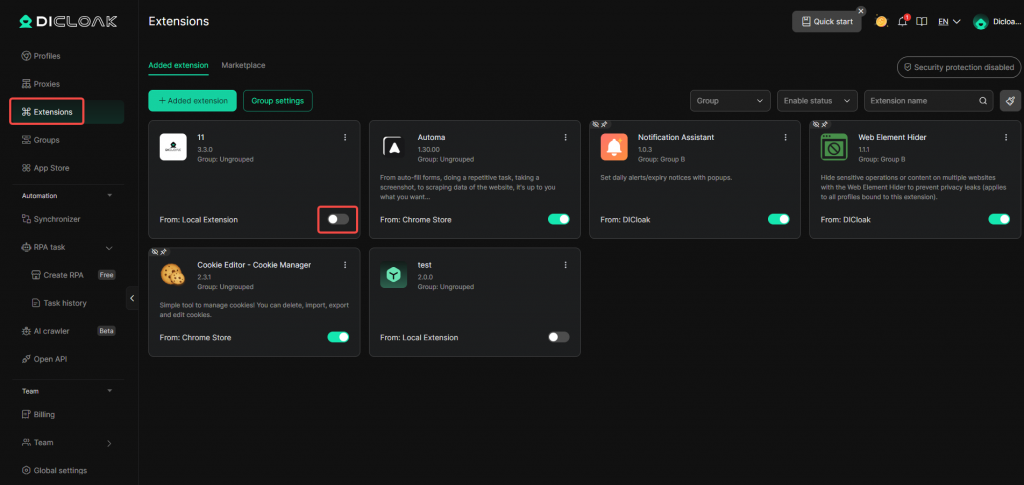
Go to Extensions, disable and re-enable the extension showing the abnormality, then reopen the profile. If you do not have permission, please contact your administrator for assistance, or try Method 2.
✅ Method 2:
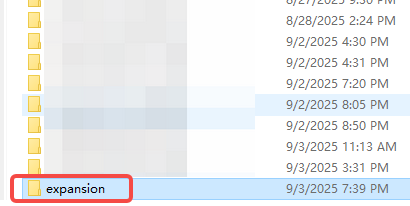
Click avatar (top right) → Personal Settings → Settings →click the “folder” and open the cache folder.
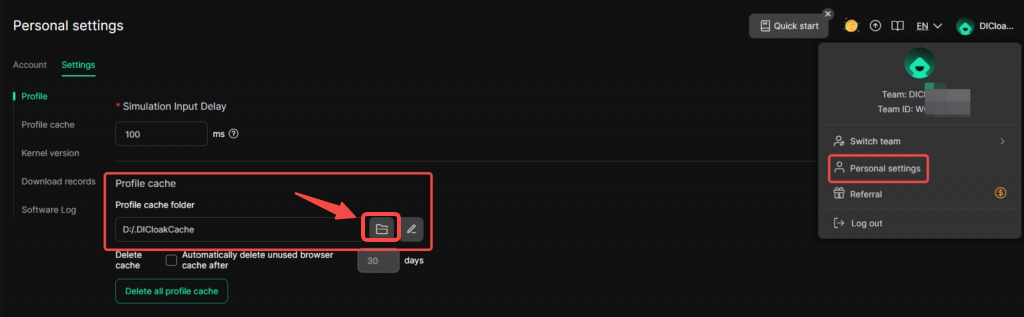
Find and delete the “expansion” competely and then reopen the profile.
📌 Case 4: The profile must be locked before it can be opened
1.Check your device version, storage and network
1.1 Make sure your hard drive has enough free space.
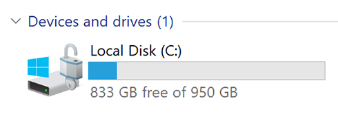
1.2 Confirm that your internet connection is stable and not restricted by a firewall or proxy.
1.3 Verify that the installation package you downloaded corresponds to your Windows system type or Mac chip type. If you downloaded the wrong version, please re-download the correct installation package from the official website and install it.
1.4 Check if your system version is too low. DICloak currently supports macOS 11 (macOS Big Sur or higher) and later versions, as well as Windows 10 and higher. If your system version is lower than these requirements, consider upgrading your system or replacing the device to resolve the issue.
1.5 If you are using a Mac and the browser kernel version is above 138, ensure your macOS version is macOS 12 or higher. If your system version is below 12, consider upgrading the system version, replacing the device, or downgrading the browser kernel to version 134 (if you do not have permission to do so, please contact your administrator) to resolve the issue.
2.Clear the cache folder
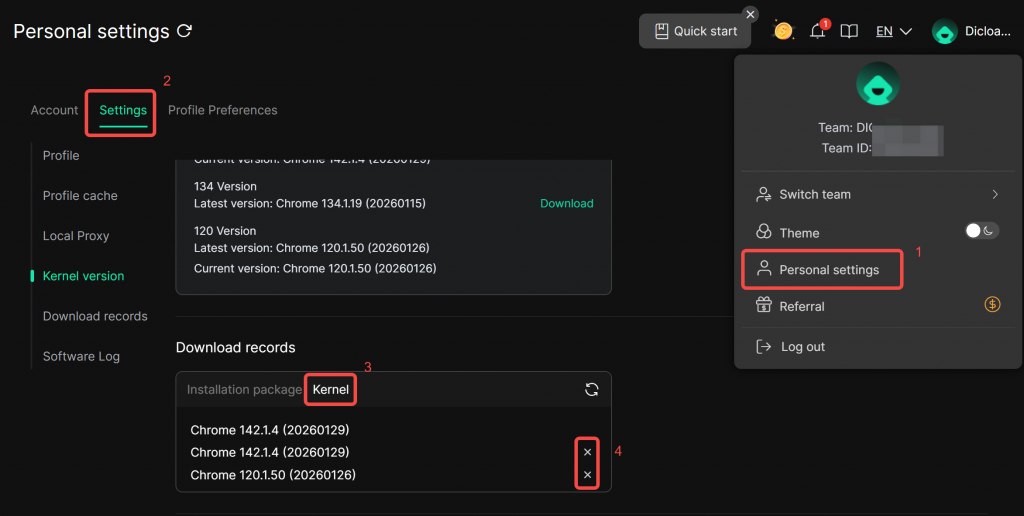
2.1 Click your profile avatar in DICloak to open Personal Settings.
2.2 Go to Settings, find Download records → Kernel, and delete all kernel files.
3.Reopen DICloak software
Close the DICloak browser software, restart the software, reopen the profile, and wait for the kernel to finish downloading before opening the profile again.
📌Case 5: Proxy Connection Failed
The proxy connection may fail due to the following reasons. Please check them one by one:
1.Incorrect proxy information configured in the profile
Ensure the proxy server’s IP address, port, username, and password are correct to avoid connection failures caused by incorrect information.
2.Invalid proxy
Verify the proxy’s validity. You can contact the proxy provider’s official support to inquire about its service status or use online proxy testing tools to check if the proxy’s IP and port are connectable and if the speed meets requirements.
- If the proxy is temporarily unavailable, wait 10-15 minutes and try connecting again to rule out temporary issues.
- If the problem persists, try switching to another proxy IP from the same provider, or purchase and configure a new proxy from a reputable service.
3.Local network issues or firewall restrictions
- Ensure your device’s network is not restricted by a firewall.
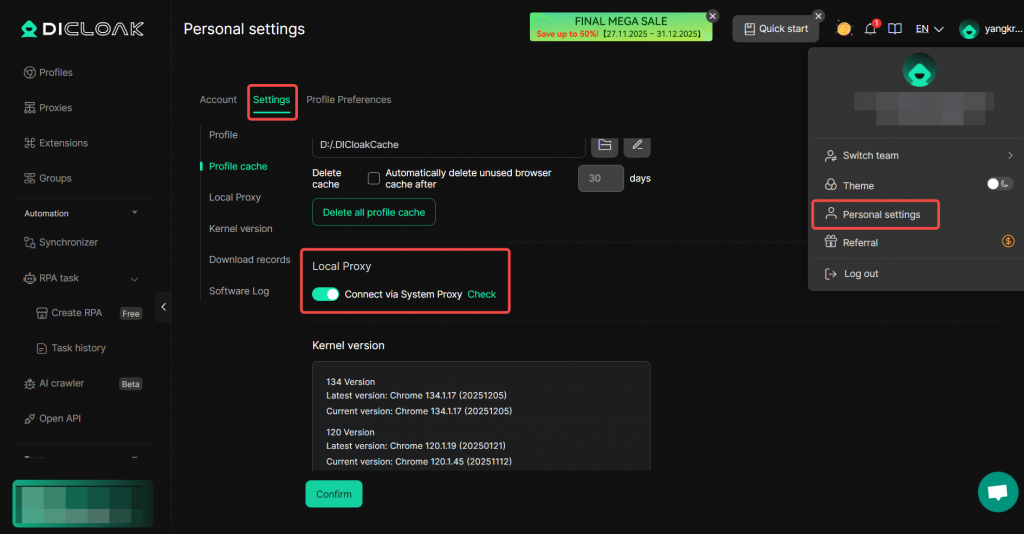
- Check if the device is using a VPN. If so, go to the top-right avatar → Personal settings → Settings, enable Local Proxy, and then try opening the profile. If it still shows “Proxy connection failed,” try switching the VPN’s network node and attempt again.
If you do not have permission to manage proxies:
Please contact your team administrator directly to report the issue. The administrator can assist in troubleshooting the proxy connection and provide further support.
📌 Case 6: “Kernel for this profile is missing”
Please refer to this guide to resolve the issue: Tutorial on solving “Kernel for this profile is missing”
📌 Case 7: “Kernel Download Complete, Extraction Failed”
Please refer to this guide to resolve the issue: Tutorial on solving “Kernel Extraction Failed”
📌 Case 8: “No Kernel Selected: The Browser Kernel for the Profile is Empty”
This error is usually caused by using an outdated version of the DICloak software. Kernel versions 142 and 143 are only supported in v2.7.18 and above. Please update your software version to use the new kernel versions.
If the above steps still do not resolve your issue
please contact DICloak Technical Support via the following methods for further assistance